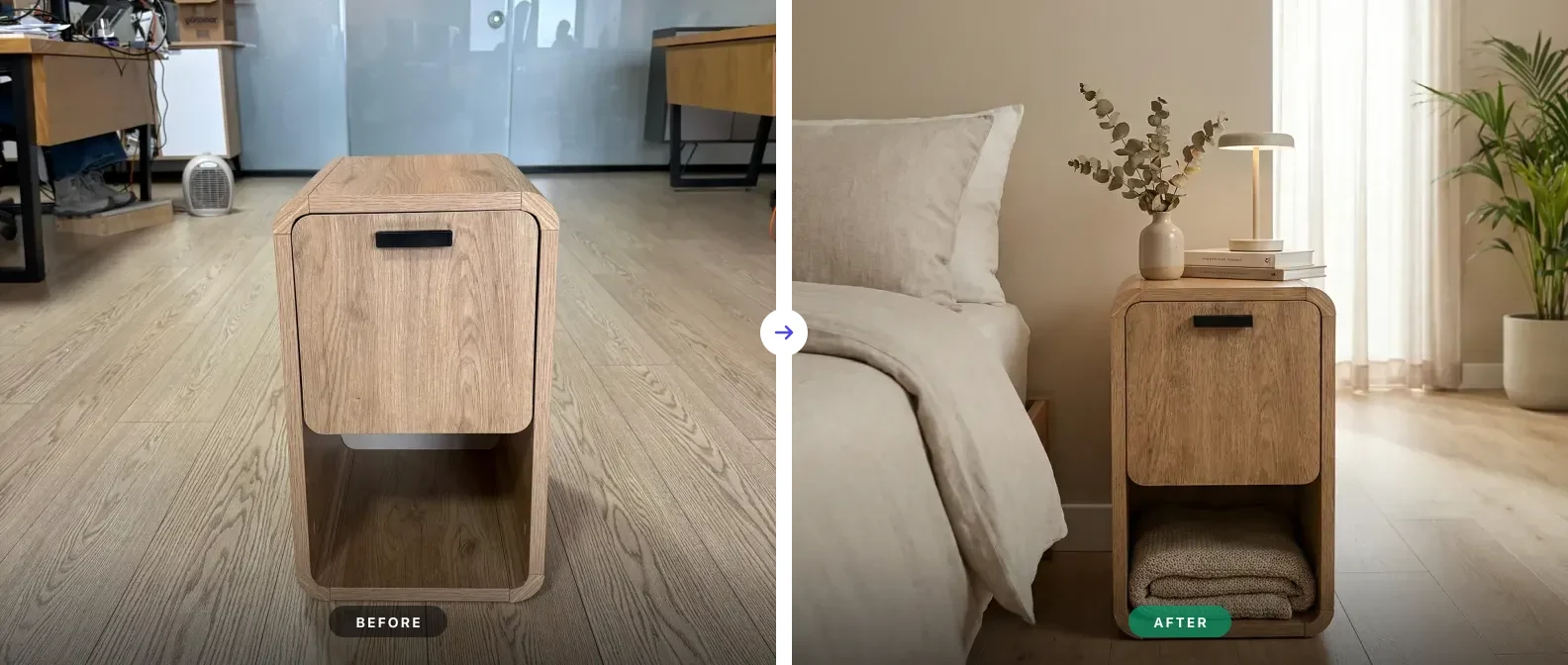
A customer is browsing for a new dining table. They see two listings side by side. One shows the table floating on a white background — clean, dimensionless, clinical. The other shows it in a warm kitchen, morning light hitting the wood, a bowl of fruit casually placed on the surface, chairs tucked in.
They click the second one. Every time.
This isn't a design preference — it's neuroscience. The way humans process visual information creates a measurable, repeatable advantage for furniture sellers who use lifestyle imagery over white-background-only listings. And in 2026, you no longer need a $5,000 photo shoot to get there.
This article breaks down why lifestyle images work (the psychology), how much they impact sales (the data), and how to create them without the traditional cost and time barriers.
The Psychology: Why Context Changes Everything
When a shopper looks at a piece of furniture on a white background, their brain enters analytical mode. They evaluate specs: dimensions, material, color. They're processing information rationally. This is useful — but it's not what drives purchase decisions.
When that same shopper sees the furniture in a styled room, something fundamentally different happens in their brain. Three psychological mechanisms activate simultaneously:
The Endowment Effect
When people can visualize themselves owning something, they value it more — even before purchasing. A lifestyle image creates a mental picture of "my living room with that sofa," which triggers a psychological sense of ownership. Research by Kahneman and Tversky shows people value items they feel they already "own" 2-3x more than identical items they don't.
Emotional Processing Over Rational
Neuroscience research from Antonio Damasio demonstrates that emotions are the primary driver of decisions, not logic. A warm room scene with natural light and complementary decor activates the limbic system (emotion center) before the prefrontal cortex (logic center) even finishes evaluating dimensions. By the time the rational brain catches up, the emotional brain has already said "yes."
Closing the Imagination Gap
Furniture has the largest "imagination gap" in e-commerce. A phone case is simple — you know what it'll look like. But a sofa? The buyer needs to mentally place it in their space, judge proportions against their room, decide if the color works with their walls. Lifestyle images do this cognitive work for the shopper, removing the biggest barrier to online furniture purchases.
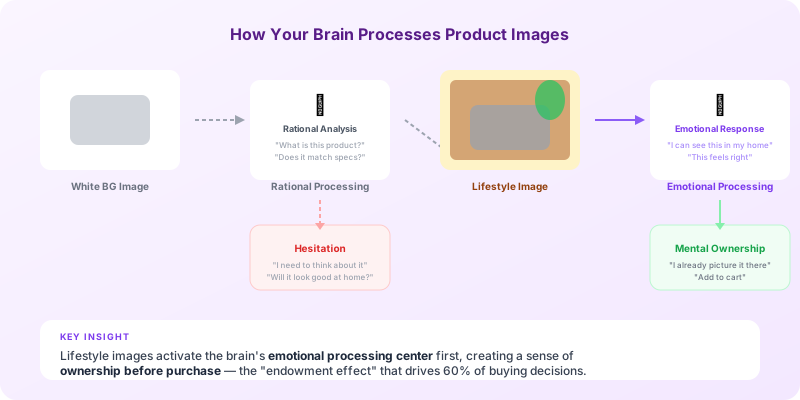
The effect compounds. When a shopper feels ownership (endowment effect), processes the image emotionally (limbic activation), and doesn't need to imagine the context (imagination gap closed) — the purchase decision shifts from "should I buy this?" to "this already feels like mine."
White Background vs. Lifestyle: What the Data Says
The psychological theory is compelling, but does it actually move revenue? The short answer: dramatically. Here's what the research shows:
higher conversion rate with lifestyle images vs. white-only
Shopify Commerce Report
more time spent on listings with room-context photography
Salsify Visual Commerce Study
fewer returns when product expectations are set by context
Narvar Consumer Survey
But the real story is in the comparison — not just the numbers in isolation, but what happens when you look at identical products presented two different ways:
Head-to-Head: Same Product, Different Presentation
| Metric | White Background | Lifestyle Scene | Difference |
|---|---|---|---|
| Click-through rate (CTR) | 1.2% | 1.95% | +63% |
| Average time on page | 48 sec | 89 sec | +85% |
| Add-to-cart rate | 3.8% | 4.9% | +29% |
| Conversion rate | 1.8% | 2.5% | +40% |
| Return rate | 18% | 14% | -23% |
Aggregated from Shopify Commerce Report, Salsify, and publicly reported A/B test results across furniture e-commerce.
The pattern is consistent across every metric in the funnel. Lifestyle images don't just look better — they perform better at every stage from first impression to post-purchase satisfaction.
And the return rate reduction is often the most undervalued metric here. For furniture, the average return costs the seller $50–$150 in shipping and handling alone. A 23% reduction in returns on a catalog of 200 products can save tens of thousands per year — enough to fund an entire year of lifestyle image production.
Where Lifestyle Images Impact the Conversion Funnel
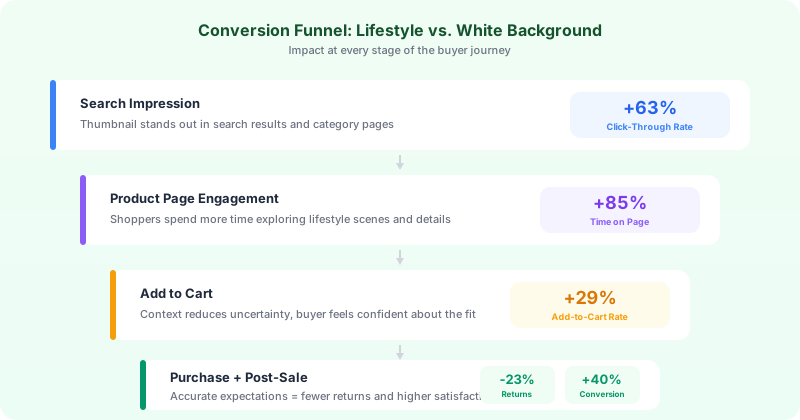
Understanding where lifestyle images create their advantage helps you prioritize which products to invest in first. The impact isn't uniform — it's concentrated at specific moments in the buyer journey:
Stage 1: The Thumbnail Click
In search results and category pages, your product is a thumbnail among dozens. A lifestyle image creates visual differentiation — the room context and warm tones stand out against a sea of white-background product shots. This is where the 63% CTR advantage materializes. Your product doesn't need to be "better" — it needs to look more interesting than the one next to it.
Stage 2: The Product Page
Once clicked, the lifestyle image does its deepest work. Shoppers linger because the scene gives them something to explore: how the sofa looks next to a bookshelf, how the table height relates to the chairs, how the wood tone complements a neutral wall. This exploration time (+85%) directly correlates with purchase likelihood — every additional 10 seconds on a product page increases conversion probability by approximately 5%.
Stage 3: The Cart Decision
The add-to-cart moment is where uncertainty either kills or converts the sale. A white-background image leaves the shopper with an unanswered question: "But will it actually look good in my space?" A lifestyle image has already answered this. The 29% add-to-cart improvement reflects reduced cognitive friction at the decision point.
Stage 4: Post-Purchase Satisfaction
The impact extends beyond the sale. When a customer has seen a product in a realistic room context, their expectations are calibrated. They understand proportions, color in real lighting, and how the piece relates to other furniture. This is why return rates drop 23% — the product matches what the buyer imagined, because the lifestyle image already showed them what to imagine.
The Traditional Problem: Why Most Sellers Don't Have Lifestyle Images
If lifestyle images are this effective, why don't all furniture sellers use them? Because until recently, the economics didn't work for most businesses:
Traditional Photo Shoot Economics
A single product shoot with a professional photographer, stylist, and rented room set costs $500–$2,000 per product. For a catalog of 100 products, that's $50,000–$200,000. Most small and mid-size sellers simply cannot justify this.
Scheduling shoots, coordinating logistics, post-production editing — the average timeline from "we need lifestyle images" to "images live on the listing" is 2–4 weeks per batch. New product launches are delayed. Seasonal opportunities are missed.
Want the same sofa shown in a Scandinavian living room, a modern loft, and a cozy den? That's three separate shoots — 3x the cost. Showing multiple room styles for each product is economically impractical with traditional photography.
Every new product, color variant, or seasonal update requires a new shoot. The process doesn't scale. Sellers end up with lifestyle images for their top 10 products and white backgrounds for everything else — which is exactly the catalog inconsistency that erodes buyer trust.
This cost-quality barrier created an uneven playing field. Large retailers with dedicated photo studios and production budgets had lifestyle imagery as standard. Everyone else — DTC brands, marketplace sellers, importers — was stuck with manufacturer-supplied white-background shots and the conversion penalty that comes with them.
Generic AI image generators attempted to fill this gap, but they introduced new problems: distorted furniture proportions, unrealistic material textures, color drift, and room scenes that look obviously artificial. These tools were built to generate images of everything — and as a result, they're not great at anything that requires domain expertise. Furniture, with its complex materials, precise proportions, and spatial relationships, demands specialized understanding that only comes from years of industry experience.
How to Create Lifestyle Images in Minutes with OmniRoom
This is exactly why OmniRoom exists — and why it was built exclusively for furniture sellers and manufacturers, not as another generic AI image tool. With 20 years of furniture visualization expertise behind it, OmniRoom is the only AI staging platform that truly understands how furniture interacts with light, space, and materials. What used to cost thousands per product and take weeks now costs a fraction and takes minutes. Here's how it works:
Upload Your Product Photo
Drop any product image — even a basic phone photo or a manufacturer-supplied white-background shot. OmniRoom's AI automatically detects the furniture piece, separates it from the background, and prepares it for placement. No cutout work needed.
Choose Your Room Style
Select from curated room environments: Scandinavian, Modern, Mid-Century, Bohemian, Industrial, Minimalist, and more. Adjust lighting, camera angle, and room details. Or describe your ideal scene in plain text and let the AI compose it.
Generate Multiple Scenes
In about 60 seconds, OmniRoom generates high-fidelity lifestyle scenes at 2K resolution. The AI preserves your product's exact colors, textures, proportions, and details — the furniture looks real because the AI understands furniture. Generate multiple room styles simultaneously with Multirooms or get up to 7 camera angles from one scene with Multi-Perspective.
Download & Publish
Download at 2K or 4K resolution, 300 DPI — ready for Amazon, Wayfair, Etsy, Shopify, or any marketplace. The images meet professional photography standards because they're generated at professional quality. No post-production editing required.
Traditional vs. OmniRoom: Side by Side
| Factor | Traditional Photo Shoot | OmniRoom AI Staging |
|---|---|---|
| Cost per product | $500–$2,000 | From $1 |
| Time per product | 2–4 weeks | Under 2 minutes |
| Room variations | 1 per shoot | Unlimited |
| Consistency | Varies by photographer | Consistent across catalog |
| Scalability | Linear cost increase | Scales instantly |
The economics are transformative. A seller with 200 products can go from zero lifestyle images to a fully staged catalog in a single day, at a fraction of what one traditional photo shoot would cost. And when new products arrive, new images are ready in minutes — not weeks.
Best Practices: Getting the Most from Lifestyle Images
Not all lifestyle images are created equal. Here's what separates the images that drive conversions from the ones that just look "nice":
Keep the product as the hero
The room should complement, not compete with, your furniture. Avoid overly busy scenes where decor items distract from the product being sold. The eye should land on your furniture first, then explore the context.
Match the room style to your target buyer
Selling affordable apartment furniture? Show it in a realistic, achievable apartment setting — not a penthouse. Selling premium pieces? The room should reflect the quality and lifestyle. The context signals who the product is for.
Use natural lighting
Scenes with warm, natural light outperform studio-lit or artificially bright images. Natural light makes the furniture look like it belongs in a real home, reinforcing the "I can picture this in my space" effect.
Show multiple angles and room styles
A single lifestyle shot is good. Three different room contexts are significantly better. Each additional lifestyle angle reduces the imagination gap further. Use OmniRoom's Multi-Perspective to show up to 7 angles from one scene, or Multirooms to show the same product in 4 different room styles.
Combine with white-background shots
Lifestyle images work best as the first image in your gallery, but don't eliminate white-background shots entirely. Some marketplaces require them (Amazon's main image), and they serve the analytical buyers who want to examine the product in isolation. The winning formula: lifestyle image first to hook, white background second to verify.
The Bottom Line
Lifestyle images aren't a "nice to have" for furniture sellers — they're a revenue multiplier. The psychology is clear: humans buy emotionally and justify rationally, and room-context imagery activates exactly the right emotional responses. The data confirms it: 40% higher conversion, 85% more engagement, 23% fewer returns.
The barrier that kept most sellers from competing on imagery — the cost and complexity of traditional photo shoots — no longer exists. AI staging tools like OmniRoom let any furniture seller, from a single-product Etsy shop to a 10,000-SKU wholesaler, create professional lifestyle images in minutes at a fraction of the traditional cost.
The sellers who will win in furniture e-commerce over the next few years aren't the ones with the biggest photography budgets. They're the ones who understand that context sells furniture — and who choose specialized tools over generic ones. OmniRoom is the only AI platform built from the ground up for furniture, by furniture industry professionals. That's not a marketing claim — it's a design decision that shows in every generated image.
Ready to see the difference?
Upload your first product photo and generate a lifestyle scene in under 2 minutes. No credit card required for your first images.
Try OmniRoom FreeRelated reading: Why visuals sell furniture online · Sofa staging that sells