Ask a furniture seller which room styles to stage their products in, and you'll hear the same two answers everywhere: Scandinavian and cozy. They're the safe picks — the styles every mood board, every competitor listing, every default template reaches for.
Our data says the safe picks are the wrong bet. Across every styled room scene generated by furniture sellers on OmniRoom between February and August 2026 (customer accounts only — our own team's usage excluded), we tracked one honest signal: after seeing the result, did the seller pay a credit to download it? The styles that win that vote are not the ones everyone chooses.
Styles Ranked by What Sellers Keep
The metric is the download rate: of all scenes generated in a style, what share did sellers keep? Styles with fewer than 40 selections are excluded from the ranking.
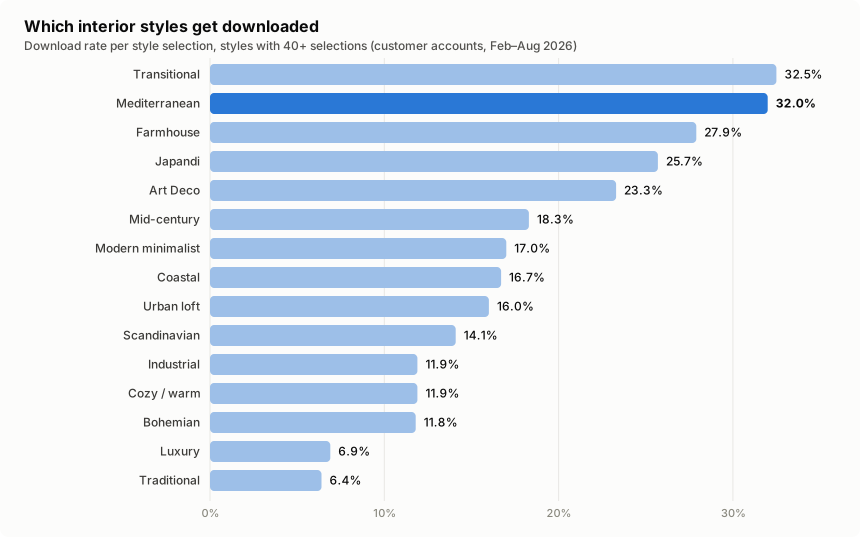
Three things jump out immediately — and each one is a working decision you can apply to your listings today.
The Quiet Champions: Mediterranean, Farmhouse, Japandi
Mediterranean converts at 32.0% — with real volume behind it (241 selections), it's the strongest style on the platform. Farmhouse (27.9%) and japandi (25.7%) complete the tier. None of the three is a "default" anywhere; sellers who pick them do so deliberately, and the results earn their keep at more than double the rate of the mainstream picks.
Why do they work? Our reading after looking at hundreds of these scenes: all three styles produce warm, textured, believable rooms — sun-washed plaster, worn wood, linen, greenery — that make furniture look lived-with rather than showroom-staged. Believability is the currency of lifestyle imagery, and these styles pay it naturally.
Transitional technically tops the chart at 32.5%, on a smaller sample (40 selections) — a style to watch rather than a verdict.
The Default Trap: Scandinavian and Cozy
The two most-selected styles on the platform — cozy (797 selections) and Scandinavian (714) — convert at 11.9% and 14.1%: roughly half the quiet champions' rate.
This is not because the styles are bad. It's a selection-bias story: they're chosen so often because they're the reflex, not because they fit the specific product. A walnut mid-century sideboard forced into a bright Scandi room fights its scene; the same piece in a warm Mediterranean or japandi setting belongs there. High-intent style choices convert; reflex choices don't.
The practical rule we draw from this: match the style to the product's material and tone before reaching for the crowd favourite. Light woods and painted finishes carry Scandi well; walnut, rattan, linen and stone want the warmer tiers.
The Bottom of the Table
Luxury (6.9%) and traditional (6.4%) sit at the bottom. Glossy marble-and-gold scenes photograph dramatically but rarely match the product being staged — and a mismatch reads instantly as fake. Unless your catalog genuinely lives in that world, the drama costs more trust than it buys.
And one number that surprised even us: custom room prompts — 121 attempts, zero downloads. Sellers who wrote their own scene descriptions instead of using a curated style kept none of the results. Scene-building turns out to be a craft: lighting, palette, prop discipline and camera all have to agree, and a curated style encodes exactly that. Freedom feels powerful; it converts terribly.
How to Use This in Your Listings
1. Lead with a warm, textured scene for wood, rattan and upholstered pieces — Mediterranean, farmhouse or japandi before Scandi-by-default.
2. Use the defaults deliberately, not reflexively. Scandinavian still fits light, minimal products — pick it for fit, not familiarity.
3. A/B different styles for the same product. Generating one product in four styles costs minutes; the download-rate gap above suggests the choice can double the share of usable images.
4. Skip the custom prompt unless you know scene design. The 0% keeper rate on 121 attempts speaks for itself.
Method notes: customer accounts only, Feb–Aug 2026; download rate = paid downloads carrying a style tag ÷ style selections; styles under 40 selections excluded from the ranking. Style popularity ≠ buyer purchase data — this measures which staged results sellers judged good enough to publish.
Related reading: Furniture photo angles ranked by download data · What 36,000 AI-staged furniture images taught us · How to create lifestyle photos for furniture