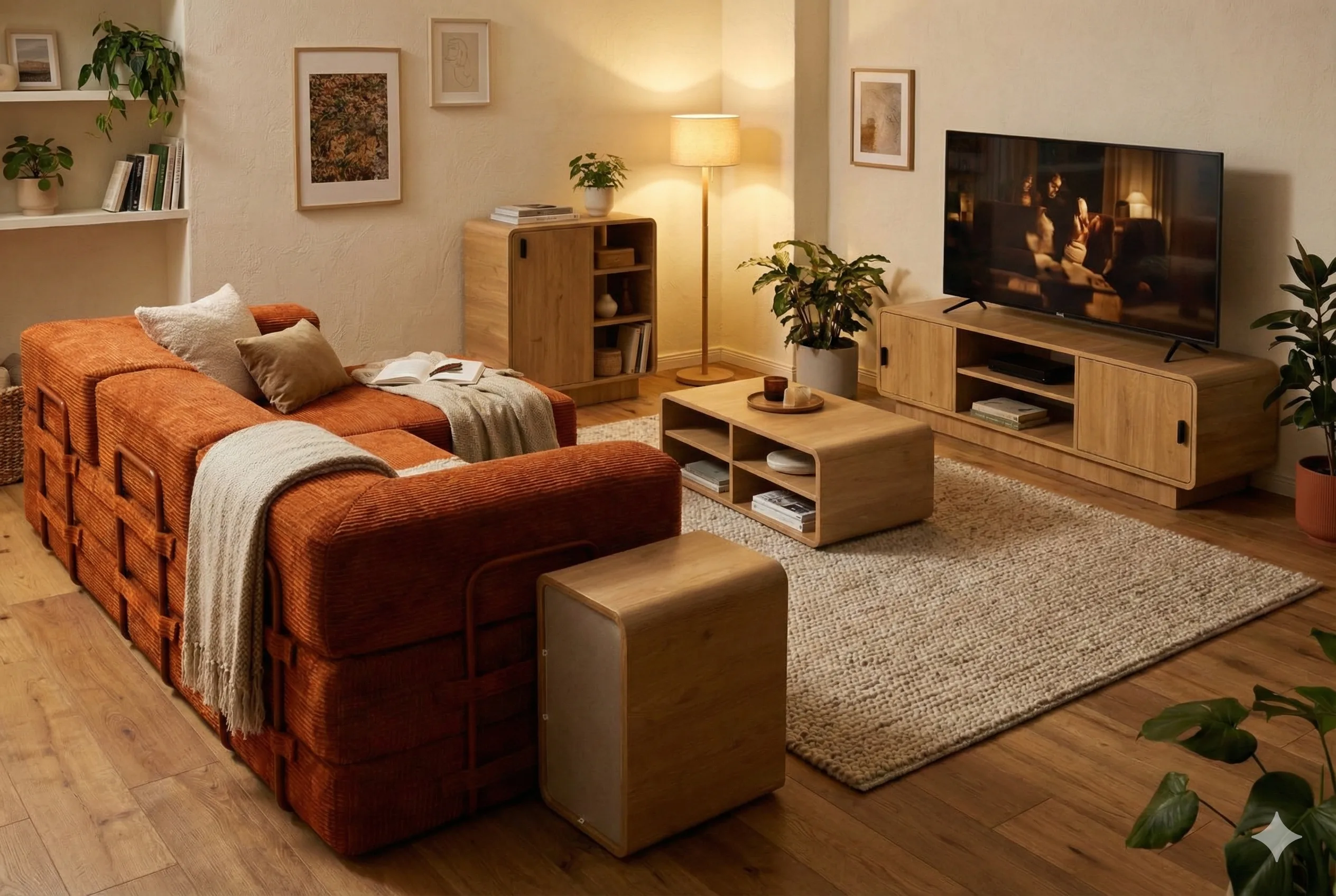
Since February 2026, sellers on OmniRoom have generated 36,000+ AI-staged furniture images across 14,490 generation runs — styled room scenes, camera angles, catalog shots. Every one of those runs left a trace: which interior style the seller picked, which angles they generated, and — the signal we care about most — which images they actually paid to download.
That last step matters. On OmniRoom, generating is free and credits are only spent on downloads, so a download is not a casual click: it's a seller deciding this image goes on my listing. Aggregated, those decisions form a picture of what furniture sellers — and by proxy their buyers — actually respond to.
We pulled the data. Some of it confirmed our instincts. Two findings genuinely surprised us.
The Numbers at a Glance
36,693 images generated across 14,490 runs (Feb 3 – Aug 7, 2026).
18,191 of those images came from customer accounts — the analysis below uses only this subset (our own team's testing is excluded).
3,859 room-style selections and 642 style-linked downloads.
2,298 camera-angle generations from room scenes.
1,923 total customer downloads across all tools.
Finding 1: What Sellers Pick Is Not What They Download
When sellers choose room styles for a staging run, three safe choices dominate: Cozy/Warm (19.6% of all selections), Scandinavian (18.2%), and Modern Minimalist (17.0%). No surprise — they're the defaults of contemporary furniture retail.
The surprise is what happens at the download step.
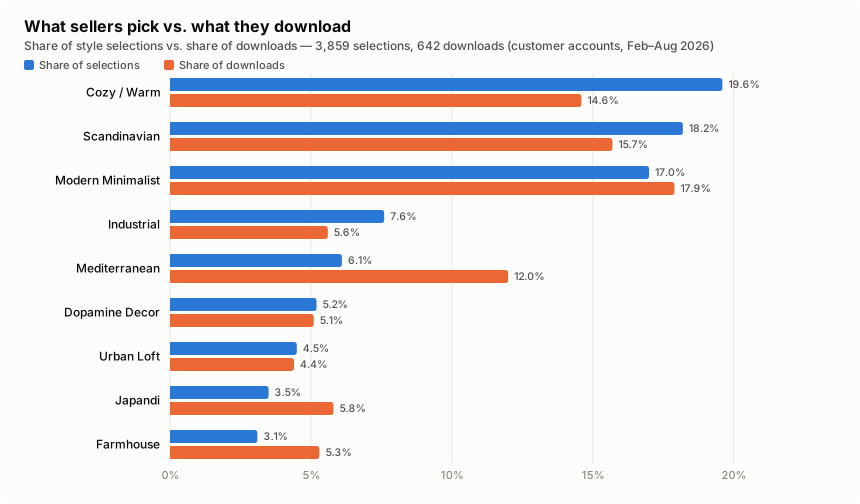
| Style | Share of selections | Share of downloads | Download index* |
|---|---|---|---|
| Mediterranean | 6.1% | 12.0% | 1.97× |
| Farmhouse | 3.1% | 5.3% | 1.73× |
| Japandi | 3.5% | 5.8% | 1.68× |
| Modern Minimalist | 17.0% | 17.9% | 1.05× |
| Dopamine Decor | 5.2% | 5.1% | 0.99× |
| Urban Loft | 4.5% | 4.4% | 0.97× |
| Scandinavian | 18.2% | 15.7% | 0.86× |
| Cozy / Warm | 19.6% | 14.6% | 0.74× |
| Industrial | 7.6% | 5.6% | 0.73× |
*Download index = share of downloads ÷ share of selections. Above 1.0 means the style is downloaded more often than it's picked.
Mediterranean is downloaded at nearly double its selection rate. Sellers reach for it a third as often as Cozy — but when they see the result, they keep it. Japandi and Farmhouse show the same pattern. Meanwhile the most-picked style, Cozy/Warm, has the second-worst download index in the set, and Industrial — a style sellers browse constantly — converts worst of all.
The pattern reads like this: sellers pick what feels safe, but they pay for what looks distinctive. A Scandinavian scene looks like every competitor's Scandinavian scene. A Mediterranean terrace or a Japandi bedroom stands out on a search results page full of grey sofas on grey rugs.
Finding 2: Why the Underdog Styles Win
Three things seem to drive the download-index gap:
Differentiation beats familiarity at the moment of payment. Choosing a style costs nothing; downloading costs credits. At the free step sellers behave conservatively; at the paid step they behave like merchandisers, and merchandisers pick the image a thumbnail-scroller will stop on.
Warm, sunlit scenes flatter furniture. Mediterranean and Farmhouse scenes are built around warm daylight and natural materials — conditions that make wood grain and fabric texture read clearly. Cold, moody styles (Industrial is the standout) can swallow exactly the detail a furniture buyer zooms in for.
Taste is regional. The Farmhouse numbers, for instance, are carried disproportionately by Southern European retailers in our data — two Greek furniture sellers account for most of its downloads. If your market is the Mediterranean rim, that "niche" style may be your mainstream.
One honest caveat: our style picker lists popular styles first, so some of the selection skew is position bias — sellers pick what's at the top. That's precisely why the download step is the more trustworthy signal, and why we now rank and default our own style list by download behaviour, not selection counts.
Finding 3: The Angles Sellers Actually Want
When sellers take a staged room scene and generate additional camera angles from it, the ranking is consistent — and the most-requested angle isn't the classic front shot.
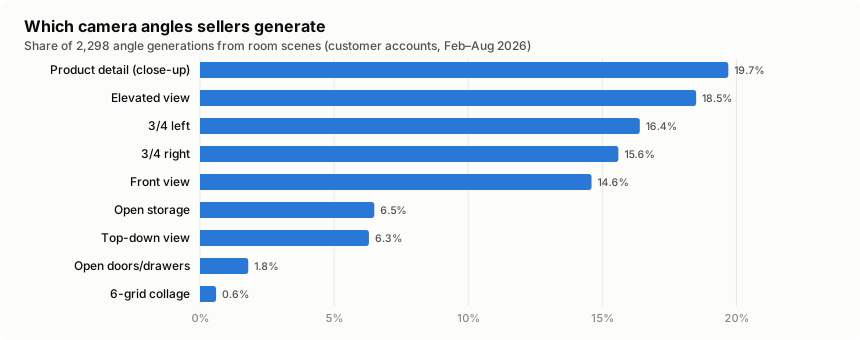
The close-up detail shot is #1 (19.7%). Furniture buyers can't touch the product, so texture has to do the convincing: fabric weave, wood grain, stitching, hardware. Sellers have learned that the zoom shot is where hesitant buyers become convinced buyers.
The elevated view is a close #2 (18.5%). Shot from slightly above, it answers the buyer's spatial questions — how deep is the seat, how does it sit in a room, what does the top surface look like — that a straight-on photo can't.
The front view ranks only fifth (14.6%). Not because it doesn't matter — it's usually the main image — but because sellers typically already have it: it's the scene they staged in the first place. The angles they generate are the ones they can't shoot.
The two three-quarter views (16.4% + 15.6%) remain the workhorses of the middle gallery, and at the bottom, the 6-panel collage barely registers at 0.6% — marketplaces want individual gallery images, not grids.
What This Means for Your Listings
1. Test one distinctive style per product. Keep your Scandinavian or Minimalist base scene, but add one warm, differentiated scene — Mediterranean, Japandi, or Farmhouse depending on your market — and let the click-through data decide.
2. Never ship a gallery without a detail shot. It's the most-wanted angle in our entire dataset. Texture sells furniture online.
3. Add the elevated view for anything with depth or a top surface. Sofas, tables, sideboards — the spatial questions get answered before they become support tickets or returns.
4. Judge images at the moment of payment, not the moment of choice. Your own instinct will drift toward safe; your buyers reward distinctive. Generate wide, then download narrow.
You can see what these styles and angles look like in practice in our examples gallery — every image there was generated the same way the images in this dataset were.
Method and Caveats
Dataset: all generation runs on OmniRoom from February 3 to August 7, 2026 — 14,490 runs, 36,693 images. Behavioural findings use only customer accounts (18,191 images); our own company's generations and downloads are excluded, which matters — including them would have flipped several conclusions.
Downloads are a proxy for "image the seller judged listing-worthy", not a measure of end-buyer conversion. Style-linked download attribution covers the period since May 2026, when we began recording it. Some styles have small absolute counts (Farmhouse: 34 downloads), so treat single-style precision accordingly; the pick-vs-pay pattern is consistent across every style where we have volume. Selection shares carry position bias from the picker's ordering, which is why the download index — not raw selection counts — anchors our conclusions.
Frequently Asked Questions
Which interior style sells furniture best online?
In our data, Modern Minimalist is the best all-rounder (high volume, above-par downloads), while Mediterranean, Japandi, and Farmhouse punch far above their weight — downloaded at 1.7–2× their selection rate. The practical answer: pair one safe base style with one distinctive warm style and measure.
Which camera angles should a furniture listing include?
At minimum: the front/main shot, a close-up detail of texture and hardware, an elevated view showing depth and the top surface, and one three-quarter view. Detail and elevated are the two most-generated angles across 2,298 angle runs in our dataset.
Is a download the same as a sale?
No — it measures what sellers judge good enough to publish, one step upstream of buyer behaviour. But because downloads cost credits while generation is free, it's a paid, deliberate signal rather than a browse.
How were these images generated?
With OmniRoom, an AI product-staging platform built only for furniture: sellers upload a product photo and generate styled room scenes, camera angles, white-background shots, and video. See our honest comparison of staging tools for how it sits among alternatives.
Related reading: Wayfair image requirements for sellers · Amazon furniture photography guide · Why visuals sell furniture online · Why retailers are switching to AI rendering · Furniture photo angles ranked by download data